
© Copyright 2004-2026 SCREEN PRO® All Rights Reserved | Specifications are subject to change without notice. All Rights ReservedSite Map Designed by iwonder.cn


RGB triple-laser projectors deliver stunning brightness and color, but they can also make laser speckle more visible. Choosing the right projection screen is essential for a smoother, cleaner, and more comfortable home theater experience.
Laser speckle is a grainy or shimmering texture that can appear when coherent laser light reflects from a projection surface. It is especially noticeable with RGB triple-laser projectors, where red, green, and blue laser light can create stronger interference patterns.
RGB laser light is highly coherent. When it reflects from a regular surface, interference can create visible sparkling, grain, or texture in bright image areas.
The projection surface can either preserve the laser pattern or help diffuse it. This is why screen material often has a major impact on visible speckle.
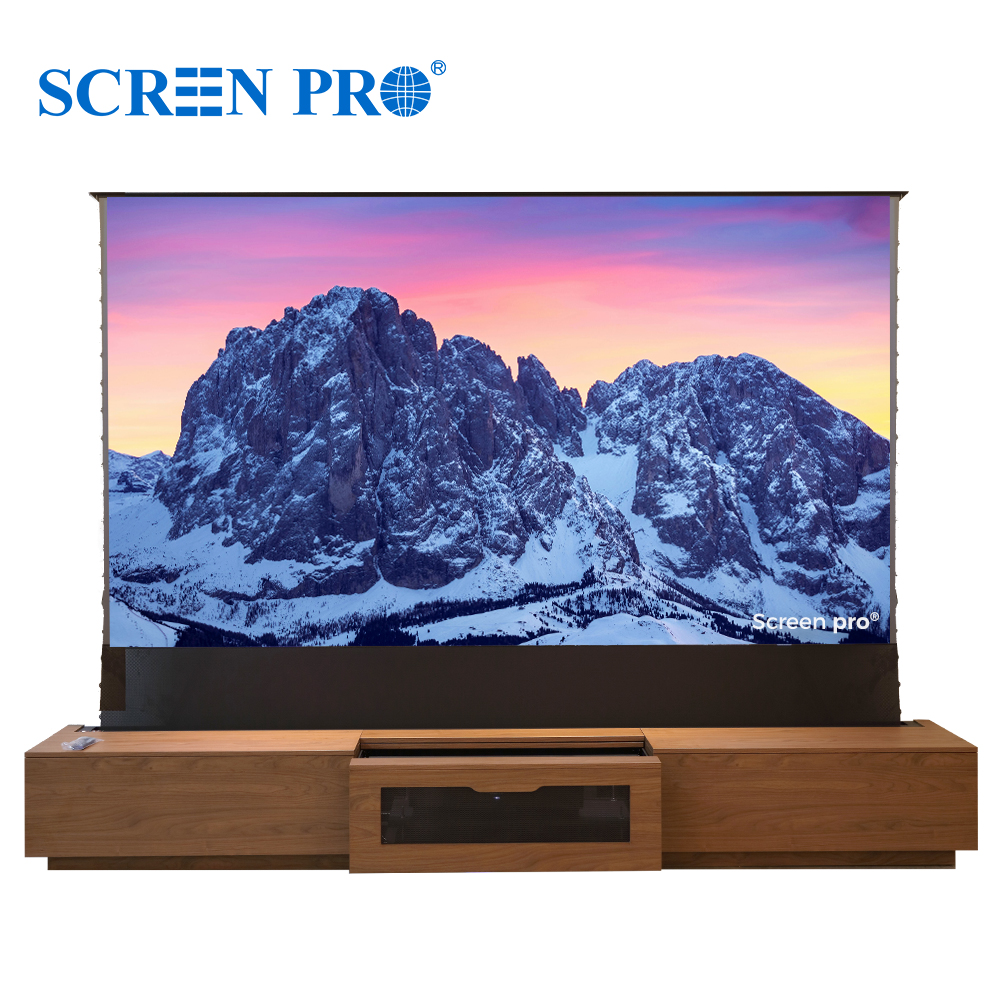
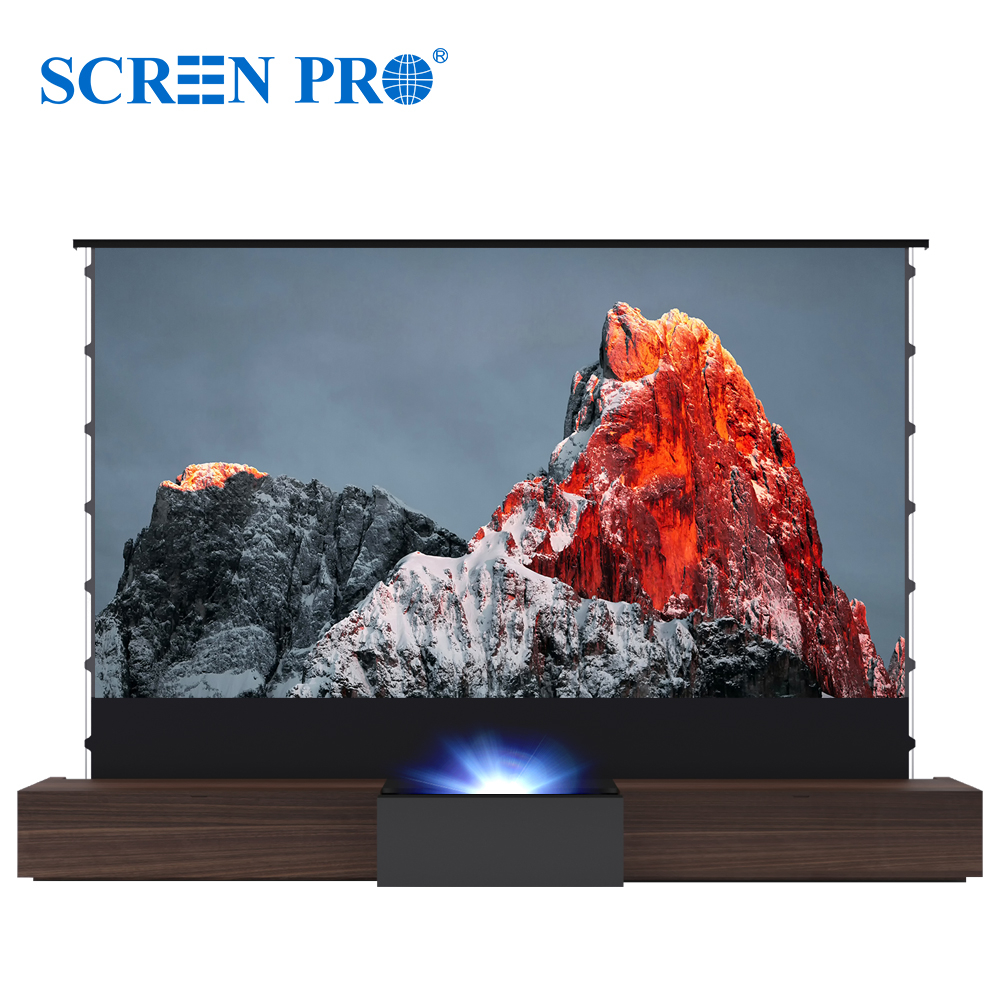
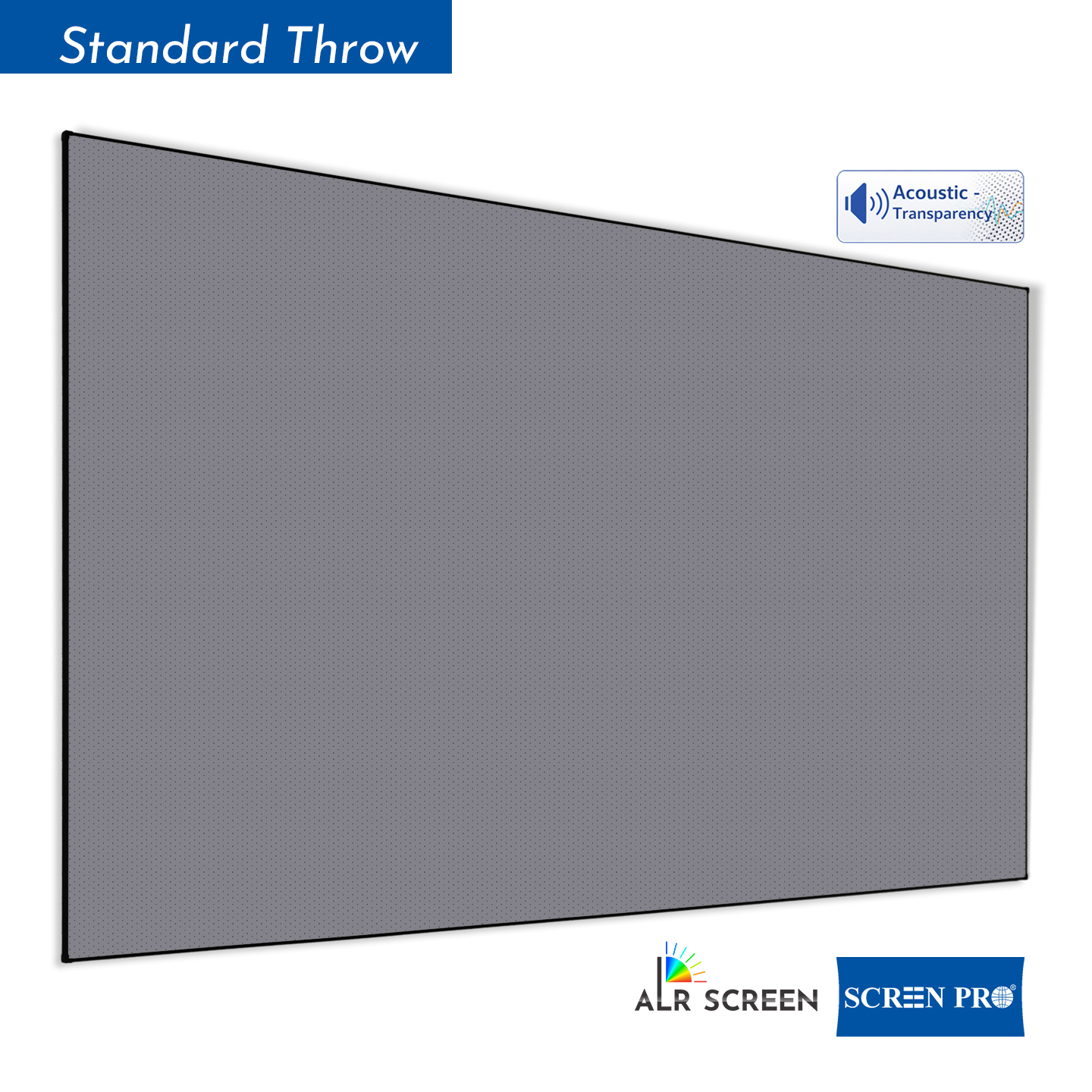
A Fresnel projection screen is a type of UST ALR screen designed for ultra-short-throw laser projectors. It uses a directional optical structure to reflect projector light toward the viewer while rejecting ambient light from above and from the sides.
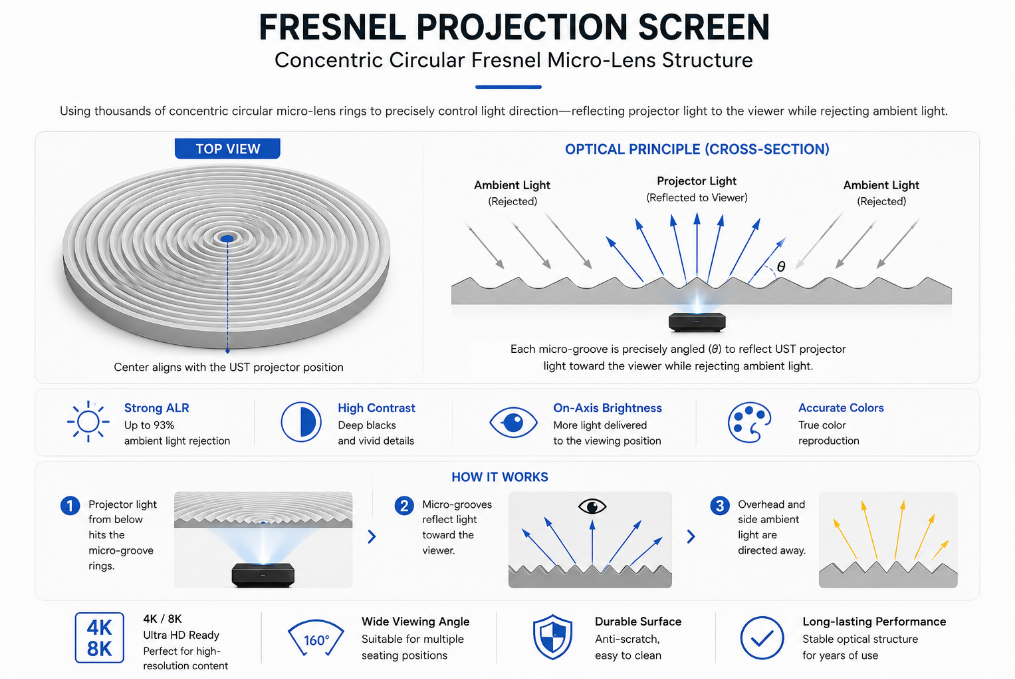
Unlike a simple matte projection surface, a Fresnel screen consists of thousands of concentric circular micro-lens rings. Each ring is precisely angled to control light direction, which helps create high on-axis brightness and strong ambient light rejection.
Fresnel screens offer strong ambient light rejection, high on-axis brightness, and excellent daytime performance for bright living rooms and laser TV setups.
Because the optical structure is highly directional, Fresnel screens may have a narrower viewing angle and are not primarily designed to reduce RGB laser speckle.
The key feature of a Fresnel screen is its concentric circular structure. The center of the ring pattern is usually aligned with the ultra-short-throw projector position, allowing the screen to redirect projected light more efficiently toward the viewer.
Light from the UST projector reaches the Fresnel micro-lens rings from below.
The angled concentric grooves guide projector light toward the viewing position.
Overhead and side ambient light are directed away to improve perceived contrast.
Fresnel screens are excellent for ambient light rejection and brightness control, but their main goal is not laser speckle reduction. Because the structure is highly directional, it may preserve more of the coherent RGB laser pattern instead of diffusing it. For some RGB triple-laser projectors, this can make speckle more noticeable, especially in bright image areas or at close viewing distances.
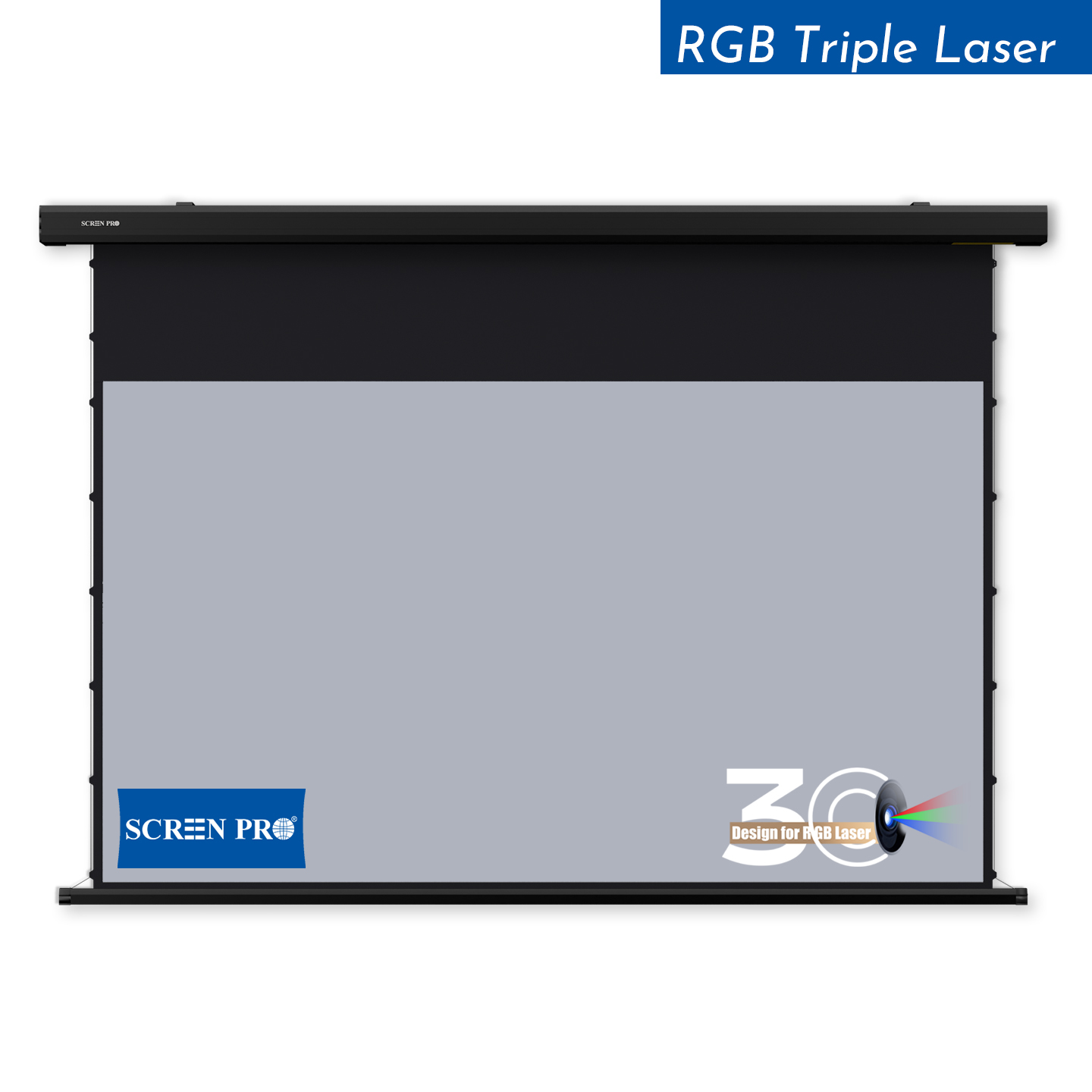
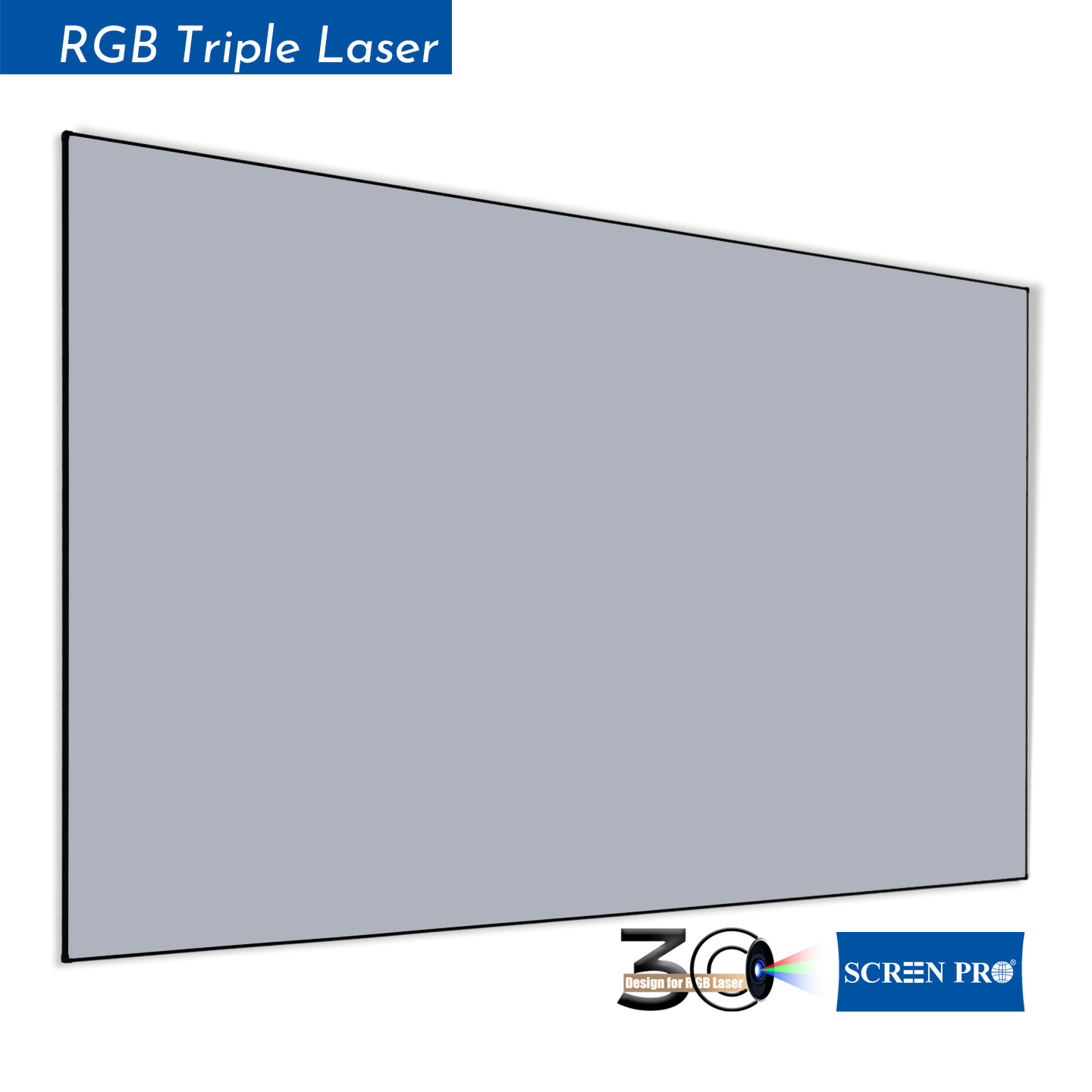
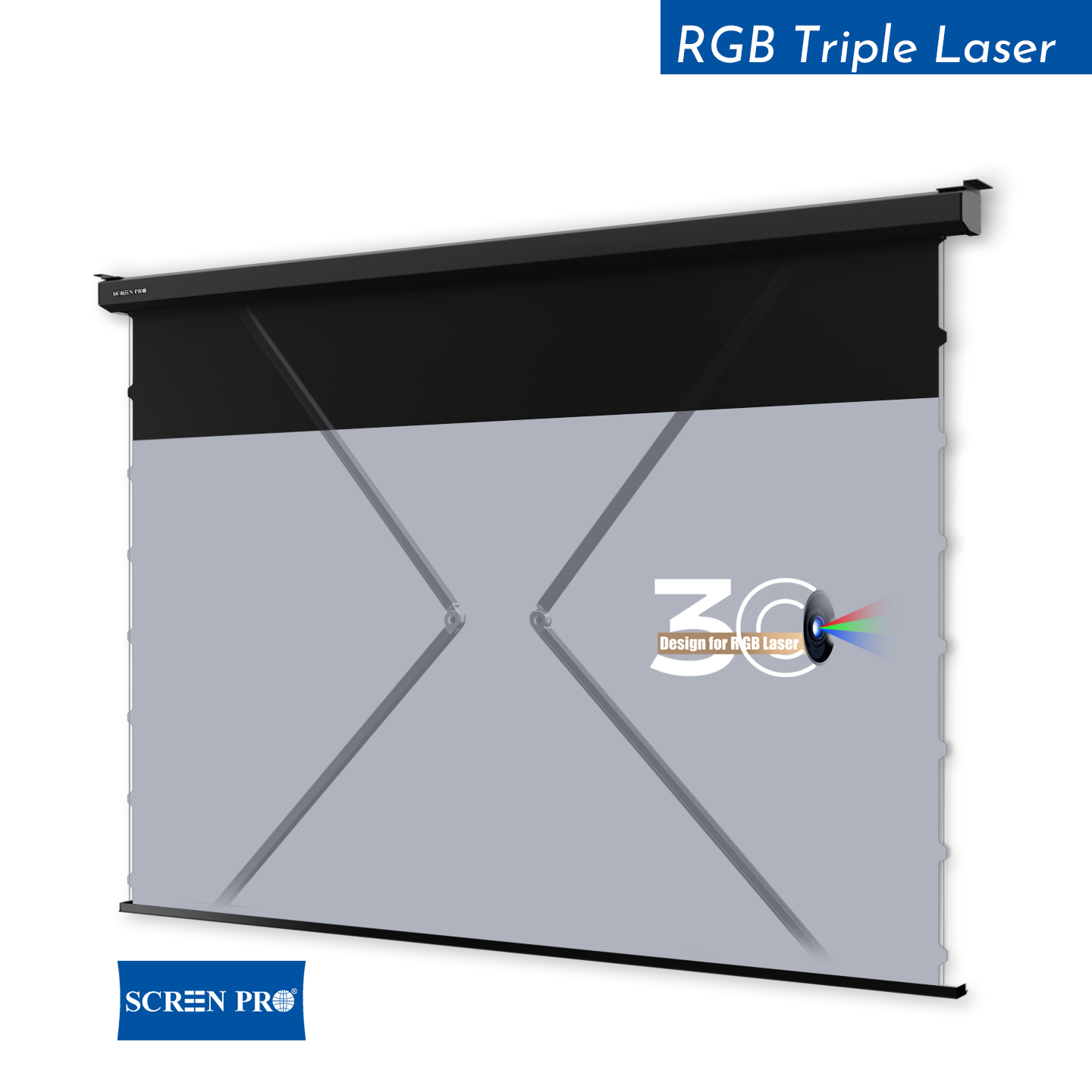
SCREENPRO® 3C is designed for modern RGB triple-laser projection systems. Instead of focusing only on brightness, 3C balances ambient light rejection, contrast, color accuracy, wide viewing angle, and laser speckle reduction for a smoother and more natural image.
Fresnel and 3C are both advanced projection screen solutions, but they are optimized for different viewing priorities.
| Feature | Fresnel Screen | SCREENPRO® 3C Anti-Speckle Screen |
|---|---|---|
| Optical Structure | Concentric circular Fresnel micro-lens rings | Multilayer anti-speckle optical surface |
| Main Purpose | Ambient light rejection and on-axis brightness | Laser speckle reduction with balanced image performance |
| Ambient Light Rejection | Excellent | Excellent |
| RGB Laser Speckle Reduction | Moderate | Excellent |
| Viewing Angle | Narrower | Wide |
| Image Smoothness | Good | Excellent |
| Color Uniformity | Good | Excellent |
| Best For | Bright living rooms with maximum brightness priority | RGB triple-laser home theater and low-speckle viewing |
Choose a Fresnel screen if maximum daytime brightness is your top priority. Choose SCREENPRO® 3C if you are using an RGB triple-laser projector and want lower visible speckle, better image smoothness, wider viewing angle, and a more natural home theater experience.
You mainly watch in a bright living room and prioritize maximum frontal brightness and strong ambient light rejection.
You use an RGB triple-laser projector and care more about reduced laser speckle, wider viewing angle, smoother images, and long-term viewing comfort.
In most RGB triple-laser setups, SCREENPRO® 3C is the better choice for reducing visible laser speckle because it is designed specifically for smoother laser projection.
Fresnel screens can improve brightness and ambient light rejection, but they are not primarily designed for laser speckle reduction. Anti-speckle materials are usually more suitable for RGB triple-laser projectors.
A concentric Fresnel structure uses circular micro-lens rings arranged around a center point. These rings help redirect projector light toward the viewer while rejecting unwanted ambient light.
Yes. Fresnel screens are excellent for bright rooms and high on-axis brightness. They are not bad screens; they simply focus on different priorities.
For RGB triple-laser home theater, SCREENPRO® 3C is usually more suitable because it reduces visible speckle while maintaining strong contrast and color performance.
No screen can guarantee 100% speckle removal in every projector and room condition, but an anti-speckle material like SCREENPRO® 3C can significantly reduce visible speckle.
Fresnel screens usually provide stronger on-axis brightness and ambient light rejection, while lenticular-style UST ALR screens may offer a wider viewing angle depending on the optical design.
RGB triple-laser projectors use highly coherent red, green, and blue laser light. When this light reflects from a screen surface, interference patterns can appear as visible speckle.
Explore how SCREENPRO® 3C combines ambient light rejection with advanced anti-speckle technology for smoother RGB triple-laser home theater projection.
Explore SCREENPRO® 3C





© Copyright 2004-2026 SCREEN PRO® All Rights Reserved | Specifications are subject to change without notice. All Rights ReservedSite Map Designed by iwonder.cn